- Anduril plans to open BlueChip laptop orders in 2027 with Qualcomm
- BlueChip prototypes source 90% of component procurement costs from American and allied suppliers
- Anduril expects its laptops to cost 20% more than comparable devices
Anduril Industries has revealed plans to enter the laptop market through a partnership with Qualcomm, with plans to begin accepting orders for its BlueChip computers in 2027.
The defense technology company, best known for its military drones, intends to reduce reliance on overseas suppliers as it develops the new laptop line.
However, its current sourcing figures show that eliminating foreign suppliers remains a future objective rather than an existing achievement.
BlueChip begins with American manufacturing
The company has developed working prototypes featuring Qualcomm Snapdragon X Series processors, which will power the laptops.
Anduril says suppliers in the United States and allied countries account for 90% of the procurement cost of the components used in its prototypes.
The company already sources several parts locally, including batteries, computer enclosures and display glass.
Its strategy also involves using metals that American industries can extract, refine and process at commercial scale.
“Other companies might design their computers in the U.S., Anduril makes them here,” said Palmer Luckey, founder of Anduril Industries, in a company video.
“We’re making parts out of metals that the U.S. knows how to extract, knows how to refine, knows how to process, and knows how to mill at scale at a reasonable price; and that goes for the entire laptop. The same thing goes for the battery technology.”
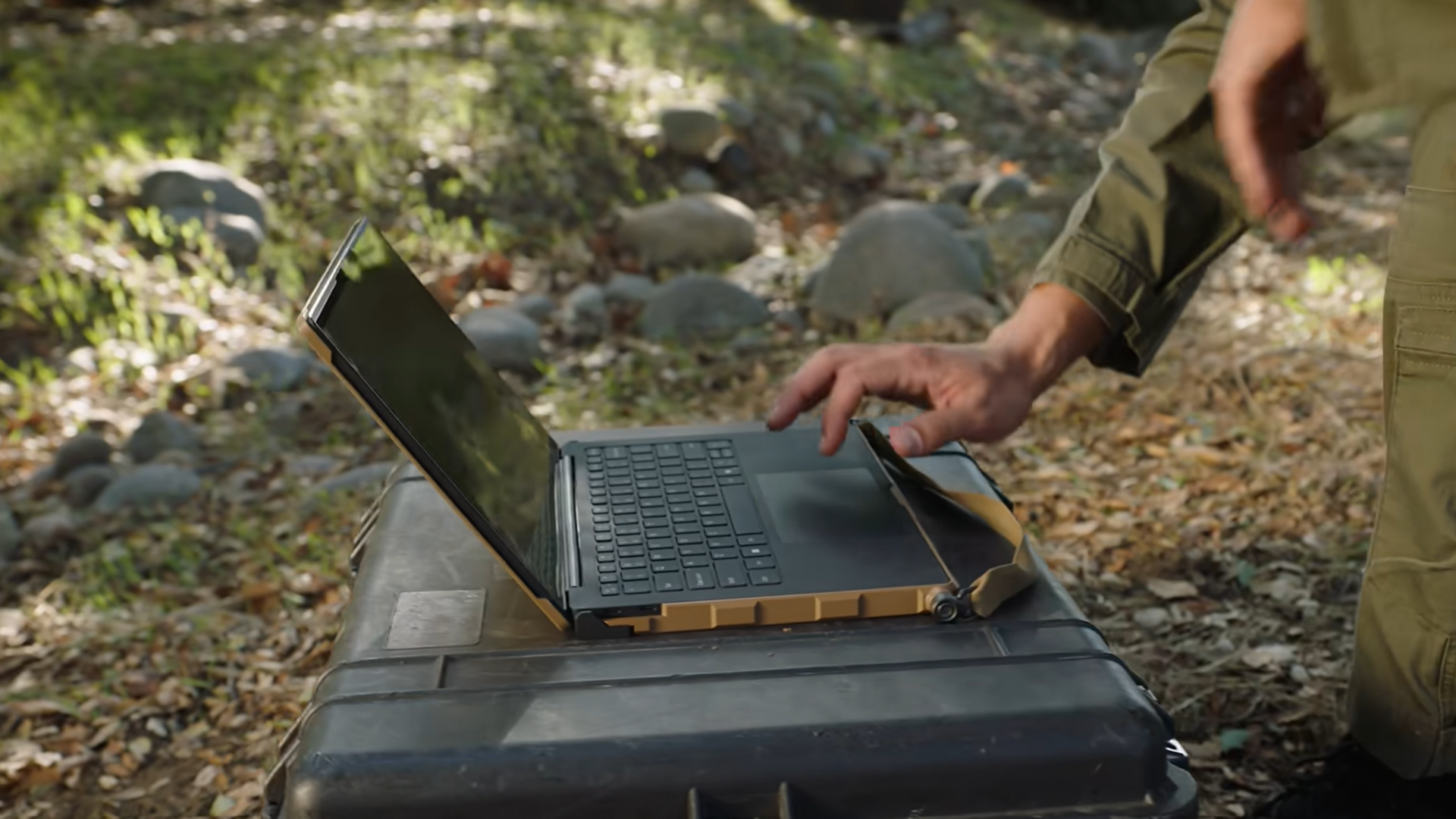
The company says the laptop is designed to withstand demanding environments, with replaceable upper and lower shells that allow users to customize its configuration.
These interchangeable panels could accommodate additions such as solar panels, specialised fabric materials and service insignia, according to Anduril’s video.
The design also allows flat phased-array antennas to be integrated directly into the laptop’s chassis, potentially supporting specialised applications in demanding operating environments.
Anduril estimates that producing a fully American-made laptop could cost 20% more than a comparable device, potentially limiting its appeal to ordinary consumers.
Therefore, it appears to be focused on customers with specific security requirements, including government agencies, military organizations, emergency responders, and public safety departments.
These buyers may accept higher prices to address concerns about hardware security and supply chain reliability.
A domestic supply chain remains difficult
Anduril acknowledges that producing complete laptops requires more than processors and selected parts.
Circuit boards, displays, batteries, and other essential components remain heavily dependent on foreign suppliers, complicating efforts to eliminate reliance on these suppliers.
“BlueChip will take a phased approach, beginning with expanding domestic sourcing and manufacturing, progressing toward eliminating reliance on foreign suppliers, and ultimately establishing an end-to-end American supply chain,” the company said in its announcement.
The project comes as semiconductor investment grows in the United States, including TSMC’s facilities in Arizona and Samsung’s site in Taylor, Texas.
These projects could improve access to locally fabricated chips, but they do not guarantee a domestic source for every part needed to assemble a laptop.
Taiwan has also planned support for smaller companies supplying TSMC through industrial parks in the United States.
Such initiatives could give BlueChip access to additional suppliers, although their eventual contribution to the laptop’s production remains unclear.
Via Tom's Hardware